Brand case study · Scam awareness · Singapore
Government gives 51% of its content to scams, most brands almost none
SOMIN's custom study read 13,324 posts and ads from 34 Singapore brands in 9 industries. Government and anti-scam bodies gave 51% of their content to scams, banks 10% and most others 0%.
The challenge
Which brands talk about scams, how often and to whom
Scams take many forms, so the study asked which brands discuss them, how much, and which scam types and audiences they cover.
The approach
13,324 posts and ads from 34 brands, read for scams
- Checked the 34 brands' websites for scam messaging.
- Collected 13,324 Instagram, Facebook and Ads Library items.
- Measured each industry's scam share and classified scam types and targets.
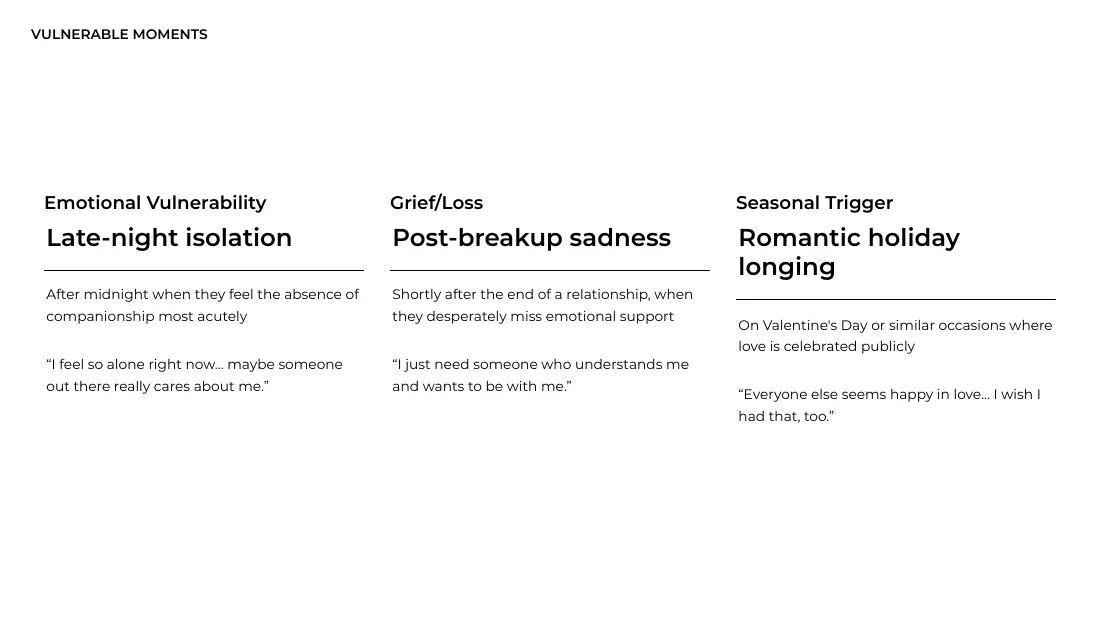
- Mapped vulnerable moments for lonely people exposed to love scams.
Key findings
Government at 51%, banks at 10%, most others at 0%
Government bodies give 51% of content to scams
574 of 1,118 items from government and anti-scam institutions. Banks came second at 10%, 602 of 6,230.
Six industries sit at 0% scam content
E-commerce, education, employment, insurance, NGO and travel brands; logistics sat at 3%.
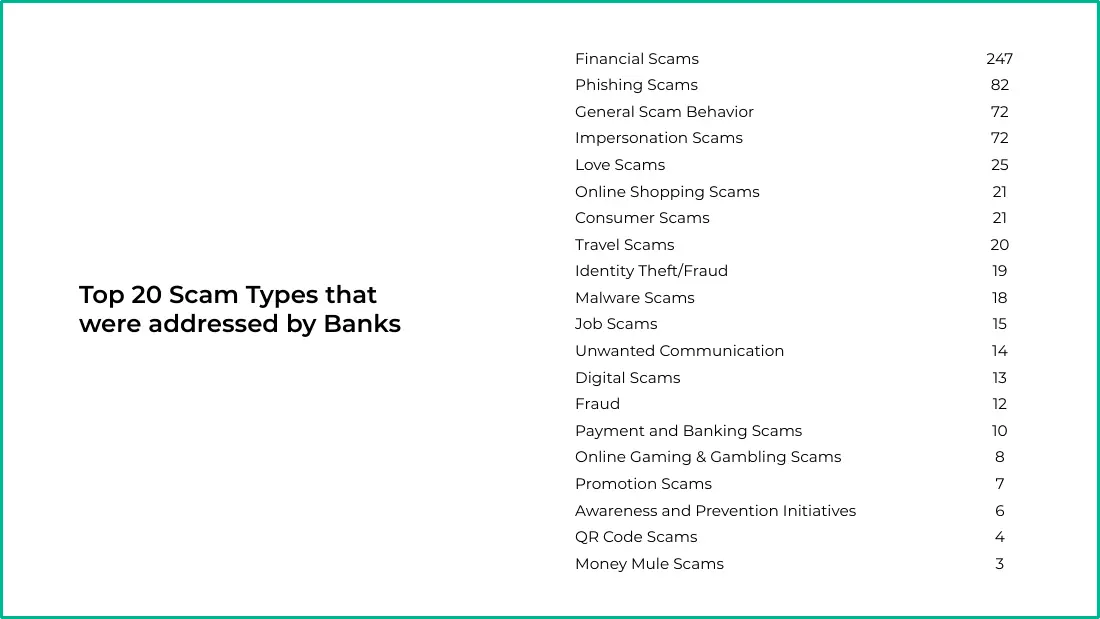
Banks lead on financial scams, with 247 items
Phishing followed at 82. Government bodies focused most on general scam behaviour (195).
What SOMIN delivered
A scam content map, 20 scam types and 6 vulnerable moments
- Scam content counted by industry
- Top 20 scam types and targets for banks and government bodies
- 6 love-scam vulnerable moments with triggers and inner voices
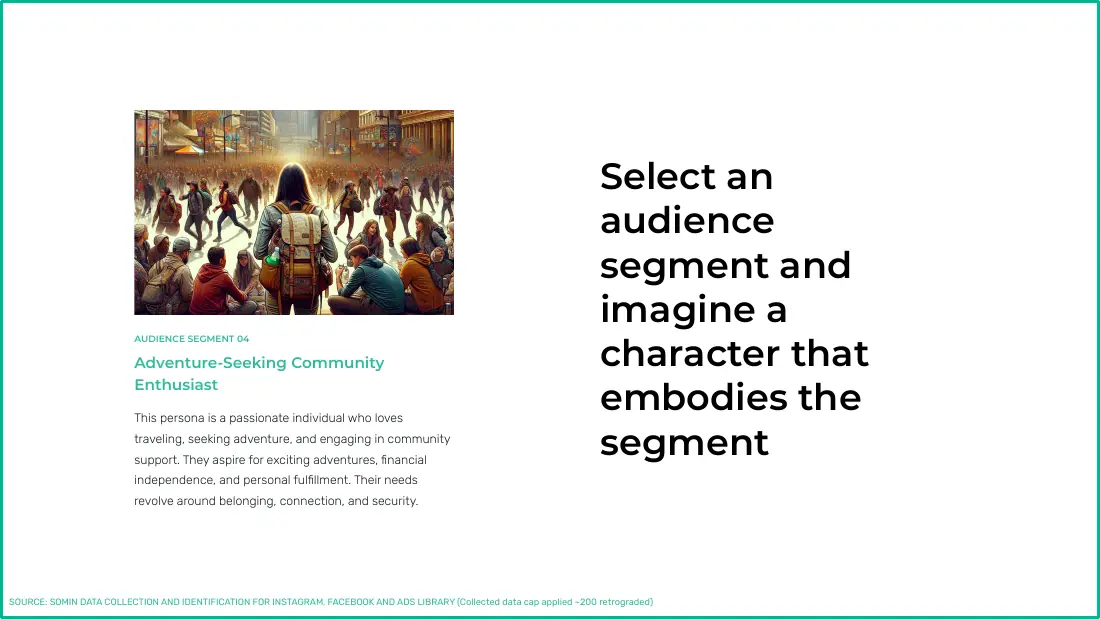
- A sample character and story of a late-night love scam
“In lonely silence, our longing for love can blind us to hidden lies.”
From the SOMIN custom study
The outcome
Scam warnings sit with two sectors, so target vulnerable moments
Two sectors carry most scam messaging, across many types, which may reinforce some kinds of awareness while drowning out others. Vulnerable moments are sharper: one audience, one scam type, one moment.
FAQ
Anti-scam study case study FAQ
About SOMIN
SOMIN is a Singapore-based AI marketing-intelligence platform. It turns real-time competitor and audience data into pre-scored propositions, briefs and creative concepts for brands, agencies and creator programmes across 11+ markets.
Built by seasoned marketers and an AI professor: the methods behind this study are peer-reviewed at AAAI, ACM Multimedia, SIGIR, WSDM and in ACM TOIS. See the research and talks.
Which industries did the study cover?
Banking, e-commerce and retail, education, employment and recruitment, government and anti-scam institutions, insurance, logistics, NGOs and travel.
Why do so few brands talk about scams?
Brands may see scams as a communication crisis, not a public service message, and warnings could undercut consumer trust.
What are vulnerable moments?
Moments when an audience is most exposed. For love scams the study maps 6, such as late-night isolation, post-breakup sadness and Valentine's Day.
Get the full Anti-scam study case study
Every page of the brand briefing: the data, the whitespace, the personas and the creative. Free, straight after a short form.