Brand case study · B2B transport · Singapore
Gojek makes 76.79% of B2B mobility content, but Grab sounds more human
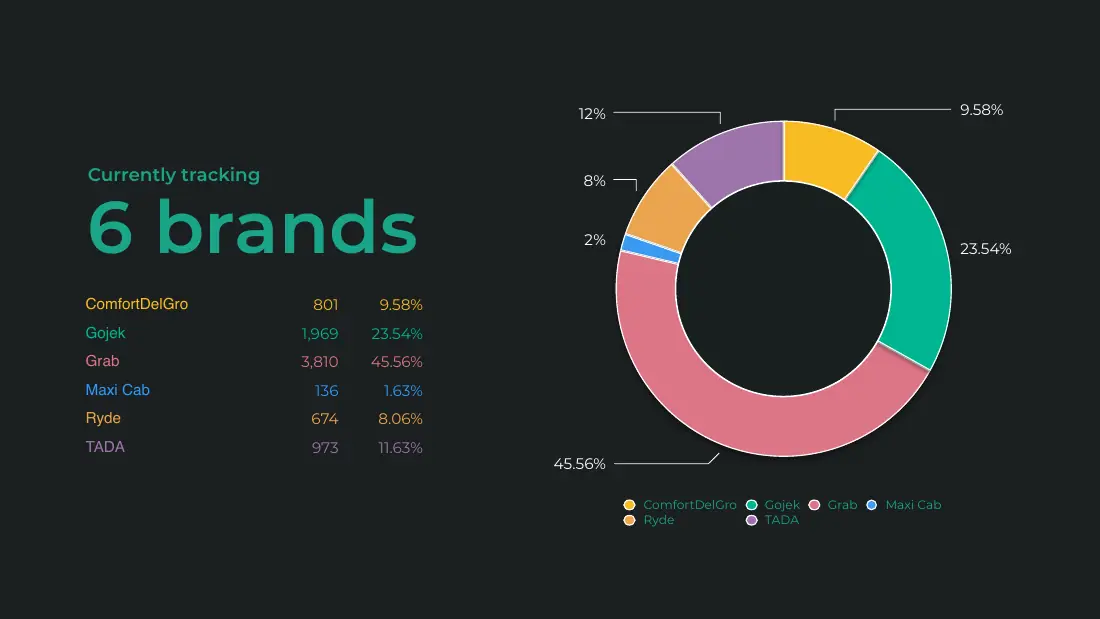
For Gojek, SOMIN read 5,967 pieces of 2023-24 media from 6 Singapore mobility brands. Gojek made 76.79% of the B2B content, yet Grab ran more variations and spoke more about employees.
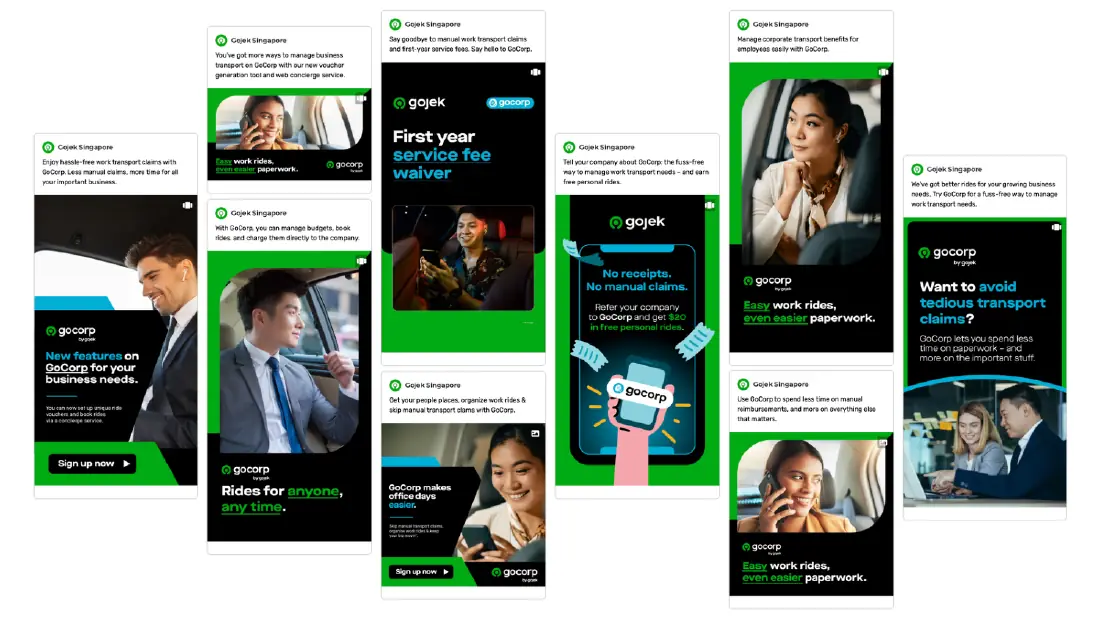
The challenge
How 6 Singapore mobility brands address businesses
The question was what recent B2B content looked like, who it targeted and what it tried to solve.
The approach
5,967 pieces filtered to B2B and clustered four ways
- Kept 2023-24: 3,703 paid and 2,264 organic pieces, 1,546 unique captions.
- Split out B2B: 18.85% of content and 30.25% of ads, almost all paid.
- Clustered it by persona, topic, relevance and challenge.
- Compared total and unique media to separate volume from variety.
- Wrote one data-driven story with society, economic and psychology angles.
Key findings
Volume, variety and employee themes in Gojek and Grab's B2B ads
Two brands own B2B
Gojek ran 867 B2B pieces (76.79%) and Grab 258 (22.85%). ComfortDelGro had 4; Maxi Cab, Ryde and TADA none.
Volume is not variety
DCO and multi-variant targeting may inflate Gojek's total; Grab has far more unique variations to test with.
Grab talks about people
Grab leads on employee benefits, recognition and satisfaction, alone covers B2B security and dominates vouchers.
What SOMIN delivered
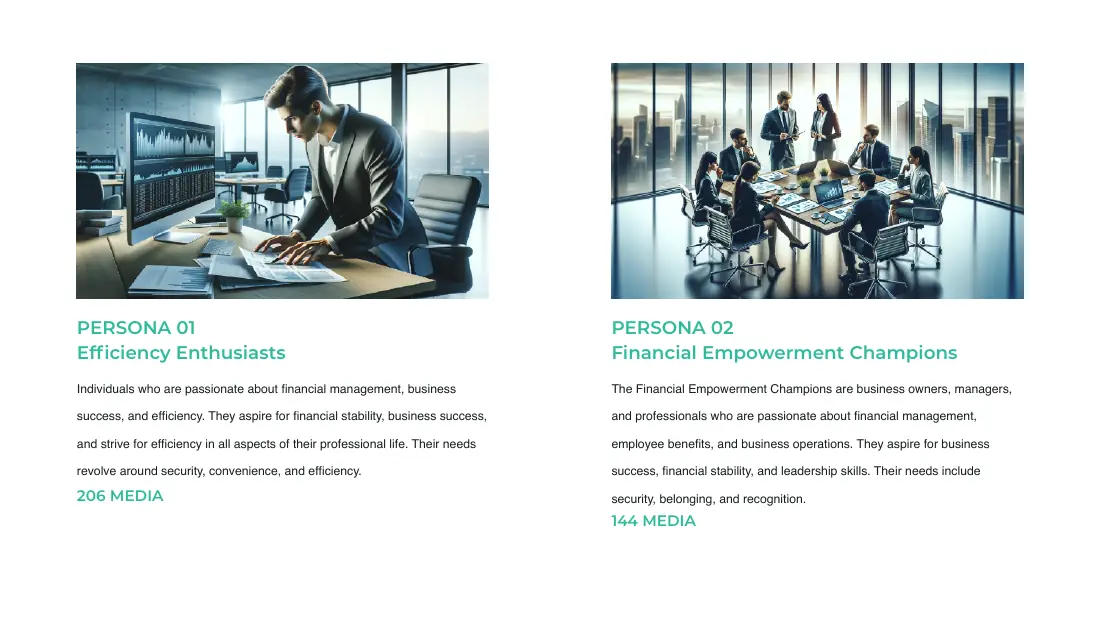
5 B2B personas, 5 topics and 4 challenge clusters for Gojek
- Personas led by Efficiency Innovators (770 media), Efficiency Enthusiasts (206) and Financial Empowerment Champions (144)
- Topics from efficient business transport and expense management (940 media) to digital gift vouchers
- 6 relevance themes, split by brand
- Analyst notes on outliers such as Thai-language content and a fire announcement
- A story-generator character, angles and short story
“It is possible to have too much of a good thing if it blinds you to the needs of those who make it all possible.”
From the SOMIN briefing
The outcome
Gojek should make B2B efficiency sound human
Explore employee satisfaction, a big issue for many companies that Grab already targets, and test angles with more unique variations, not volume.
FAQ
Gojek case study FAQ
About SOMIN
SOMIN is a Singapore-based AI marketing-intelligence platform. It turns real-time competitor and audience data into pre-scored propositions, briefs and creative concepts for brands, agencies and creator programmes across 11+ markets.
Built by seasoned marketers and an AI professor: the methods behind this study are peer-reviewed at AAAI, ACM Multimedia, SIGIR, WSDM and in ACM TOIS. See the research and talks.
What data did the Gojek case use?
8,363 paid and organic pieces from 6 brands, 2016 to 2024; the B2B analysis used 5,967 from 2023-24, with paid media from 19 September 2023.
Which brands were compared?
ComfortDelGro, Gojek, Grab, Maxi Cab, Ryde and TADA. Only the first three ran B2B content.
How were the personas found?
X-means clustering on ADA embeddings with SOMIN's audience, topic and insight models.
Get the full Gojek case study
Every page of the brand briefing: the data, the whitespace, the personas and the creative. Free, straight after a short form.