Creator case study · Cafe chain · Singapore
Creators put 63% of Foodie content into discovery, Tim Hortons puts 0%
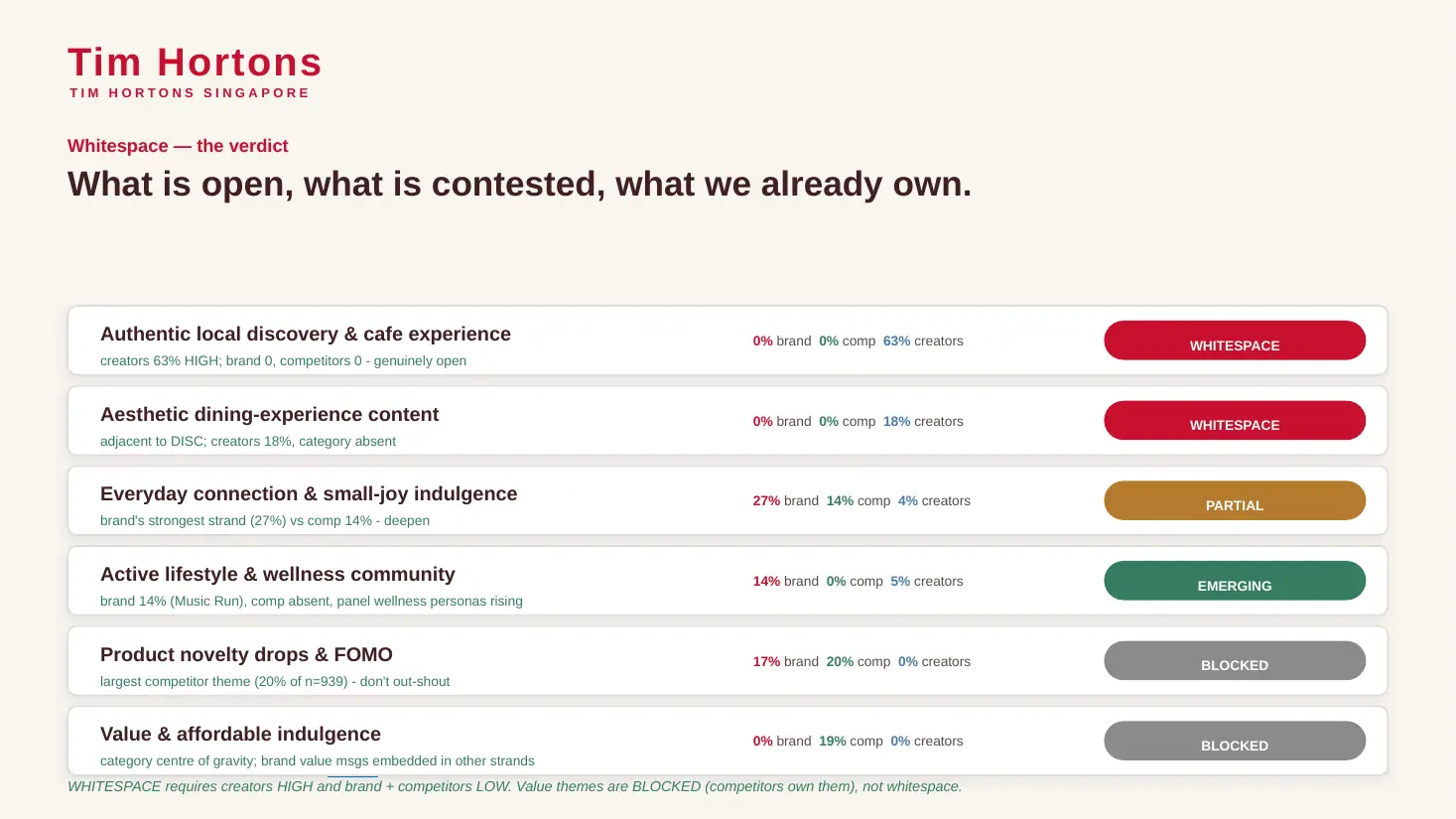
SOMIN read 12 months of Foodie content from Tim Hortons, six Singapore competitors and four Foodie creators. Creators put 63% of theirs into authentic local discovery and cafe experience; the brands put 0%.
The challenge
Tim Hortons faces 6 Singapore rivals that already own value
Starbucks, Luckin Coffee, Tanamera Coffee, The Coffee Bean & Tea Leaf, Koi and Paris Baguette Singapore already own value and affordable indulgence. Where could Tim Hortons stand out without out-shouting them?
The approach
Brand, competitor and creator cohorts over 12 windows
- Re-ran 12 monthly windows against the year before (n=692).
- Compared cohorts by share, not raw counts: Tim Hortons (71), competitors (939), creators (190).
- Checked SOMIN's ads library for paid activity.
- Linked the pillars to 45 moment triggers.
- Added a live 30-day topicality study of 85 panel posts.
Key findings
Tim Hortons on discovery, value and small joys
Discovery is wide open
Brands leave it at 0%. In the last 30 days, it was still 39% of creator panel posts.
Value is crowded
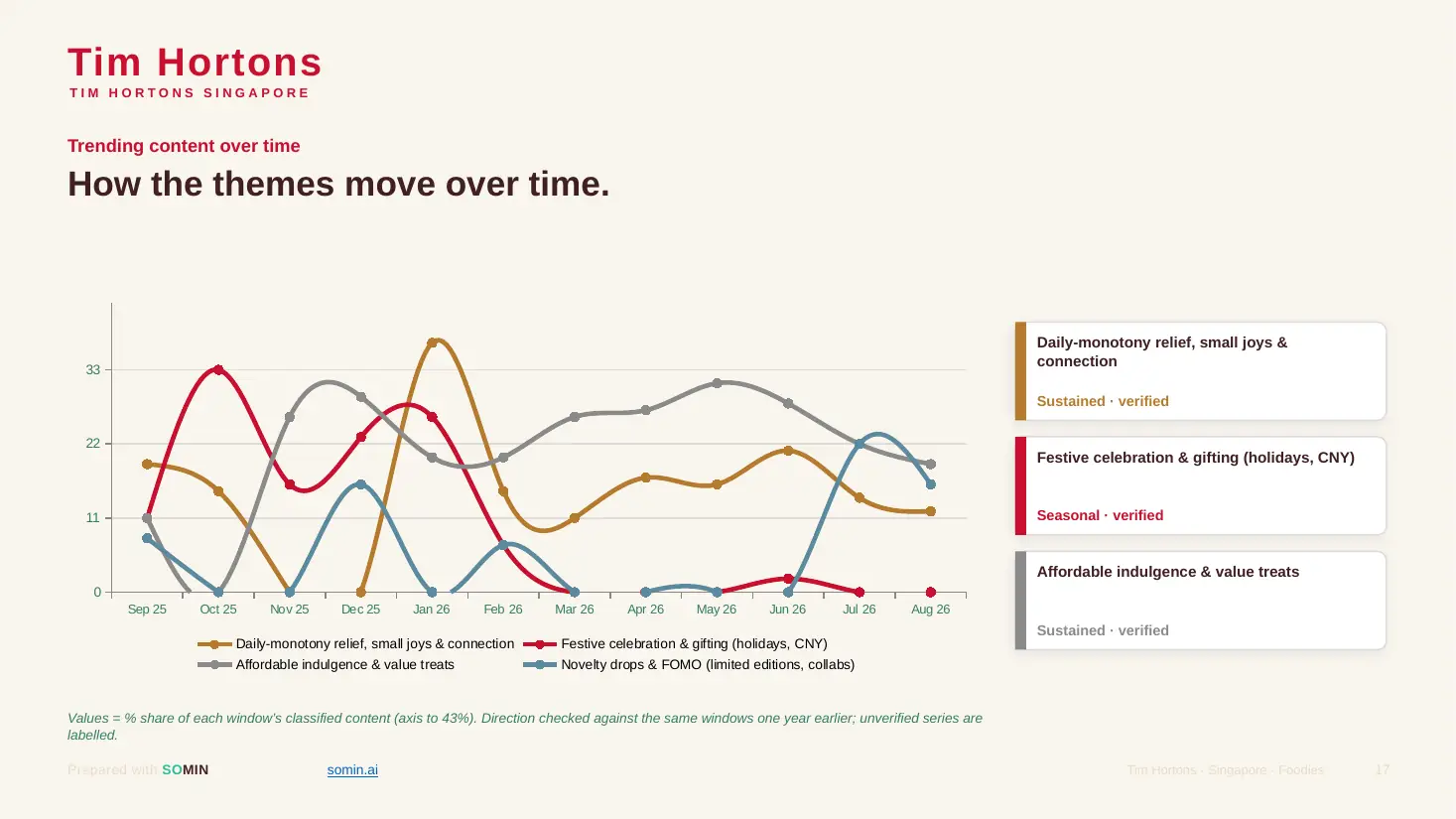
Affordable indulgence rose from 11% to 19% of category content, prior-year verified, but competitors own it; novelty drops lead at 20%.
Small joys are Tim Hortons' own strand
Everyday connection and small-joy indulgence is 27% of Tim Hortons' content against competitors' 14%: partial, a strand to deepen.
What SOMIN delivered
Three pillars, nine propositions and a 38-post Q4 calendar
- Pillars: The Discovery Destination (45%), Small Joys, Shared (35%) and Fuel for the Active City (20%)
- Three persona-to-story insight chains
- Nine SOMIN propositions across product features, USP and promotion
- From 1 Oct, three posts a week with 12 lead posts
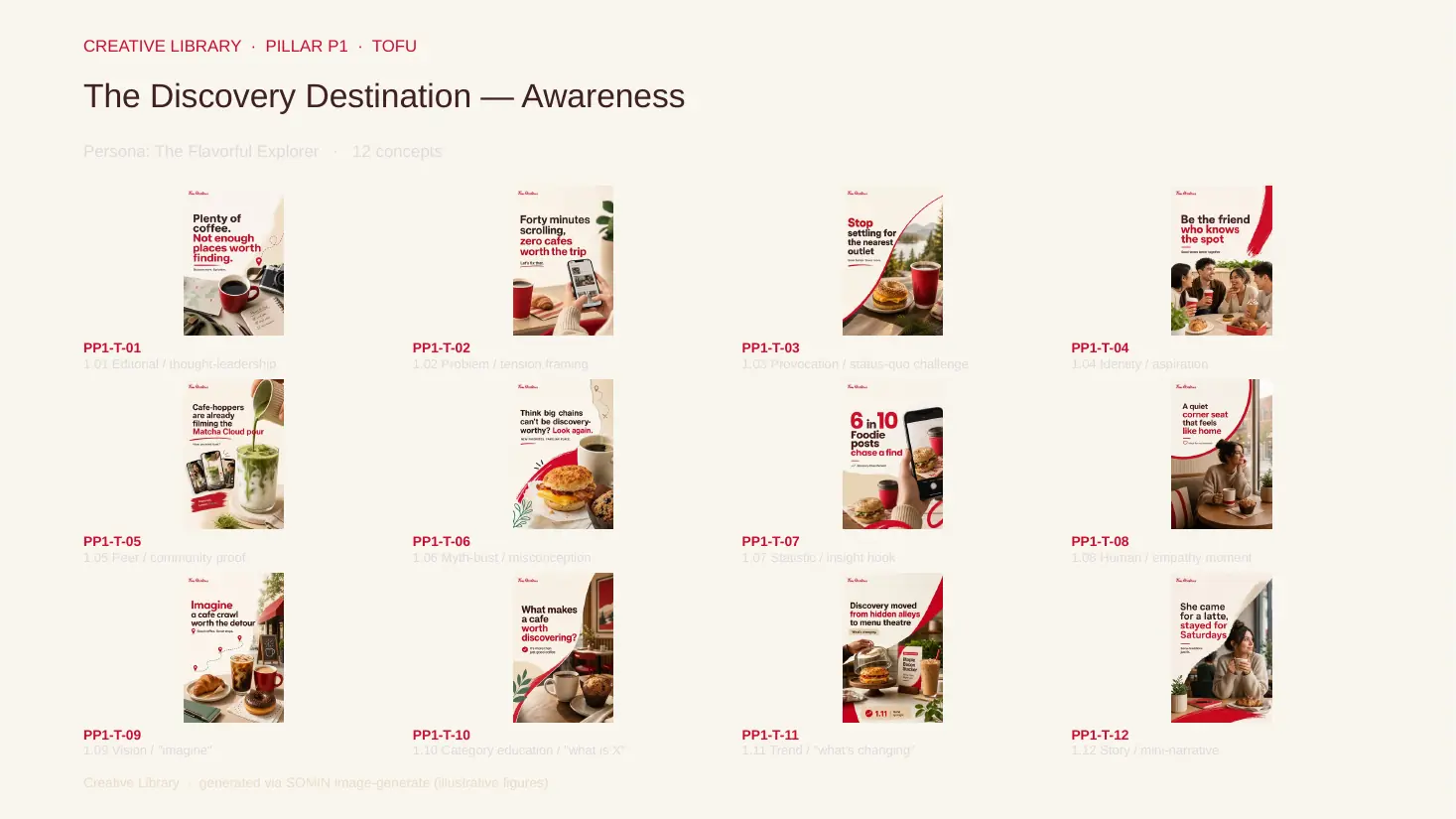
- 108 creative concepts, 36 per pillar across the funnel
“Competitor absence is not permission. Each pillar rests on a real Tim Hortons asset.”
From the SOMIN briefing
The outcome
Tim Hortons should claim The Discovery Destination first
Make each Tims store, drink and collab worth finding. No brand ran visible paid content, so it can be claimed without outbidding anyone; the other two pillars support it.
FAQ
Tim Hortons case study FAQ
About SOMIN
SOMIN is a Singapore-based AI marketing-intelligence platform. It turns real-time competitor and audience data into pre-scored propositions, briefs and creative concepts for brands, agencies and creator programmes across 11+ markets.
Built by seasoned marketers and an AI professor: the methods behind this study are peer-reviewed at AAAI, ACM Multimedia, SIGIR, WSDM and in ACM TOIS. See the research and talks.
Who are the Foodies in this briefing?
Foodies means content made for Foodies, not a measured audience. The primary persona is The Community Connector.
Why is value not the recommended pillar?
Competitors own value, the category's centre of gravity, so it is blocked. Only discovery and aesthetic dining content have creators high and brands low.
How reliable are the trend calls?
Brand and competitor trends were checked against the prior year. Creator trends start around Dec 2025 and are unverified, and Sep to Dec 2025 is low confidence.
Get the full Tim Hortons case study
Every page of the creator briefing: the data, the whitespace, the personas and the creative. Free, straight after a short form.