
AI is changing competitor and audience research by joining two kinds of data that used to sit apart: what competitors say in their ads, and what the audience actually believes and values. At a Marketing Mondays session, SOMIN and GWI showed how that combination revealed that Miraflora Wagyu's buyers were deal-sensitive rather than price-sensitive, which moved the fix from discounting to a clearer purchase journey, clearer messaging and stronger perceived value.
Key takeaways
- Rising cost per lead despite great creatives is rarely solved by "just spending more".
- Competitor ad analysis shows what rivals lead with, in which formats and at which funnel stage; audience data shows beliefs, behaviours, income tiers and attitudes.
- For Miraflora Wagyu, the audience wanted to feel they were getting value, not necessarily to pay less.
- A six-step framework turns a data-backed persona into a story: persona, character, pain point, angle, product, then content.
- The goal is not to hand campaigns to machines but to make better, faster decisions with AI as an assistant.
What was the Marketing Mondays session about?
If you have ever stared at your campaign dashboard wondering why your cost per lead keeps climbing despite great creatives, you are not alone. At our latest Marketing Mondays session, "AI-Driven Competitor and Audience Research for Smarter Digital Strategies", we unpacked exactly that dilemma.
And no, the solution is not "just spend more".
Hosted by Prof. Aleks Farseev (CEO of SoMin.ai) and Sufyan Sulaiman (Solutions Partner at GWI), the session looked at how AI tools are changing the way we plan, measure and optimise marketing campaigns. The mission was to show how marketers can use AI tools to understand what their competitors are doing and, more importantly, what their audience actually values.
Held at JustCo's busy coworking space, the event drew marketers, strategists and founders keen to sharpen their competitive edge with the one thing that levels the playing field: data.
What did AI research reveal for Miraflora Wagyu?
Miraflora Wagyu, a Colorado-based premium beef company, was grappling with high customer acquisition costs. At first glance, the team assumed the issue was pricing. After all, Wagyu is not cheap. But a deeper dive using SoMin.ai and GWI revealed a more nuanced truth:
The audience was not truly price-sensitive. They were deal-sensitive.
Consumers wanted to feel they were getting value, not necessarily to pay less. The question became how to move customers down the funnel by assuring them they were getting the best deal. The conversation shifted from discounting to improving the purchase journey, messaging clarity and perceived value. After all, relevant information makes it easier for customers to understand what they are buying.
How do competitor analysis and audience data work together?
The two hosts demonstrated how combining SOMIN's competitor analysis with GWI's psychographic insights gave a 360-degree view of the target market.
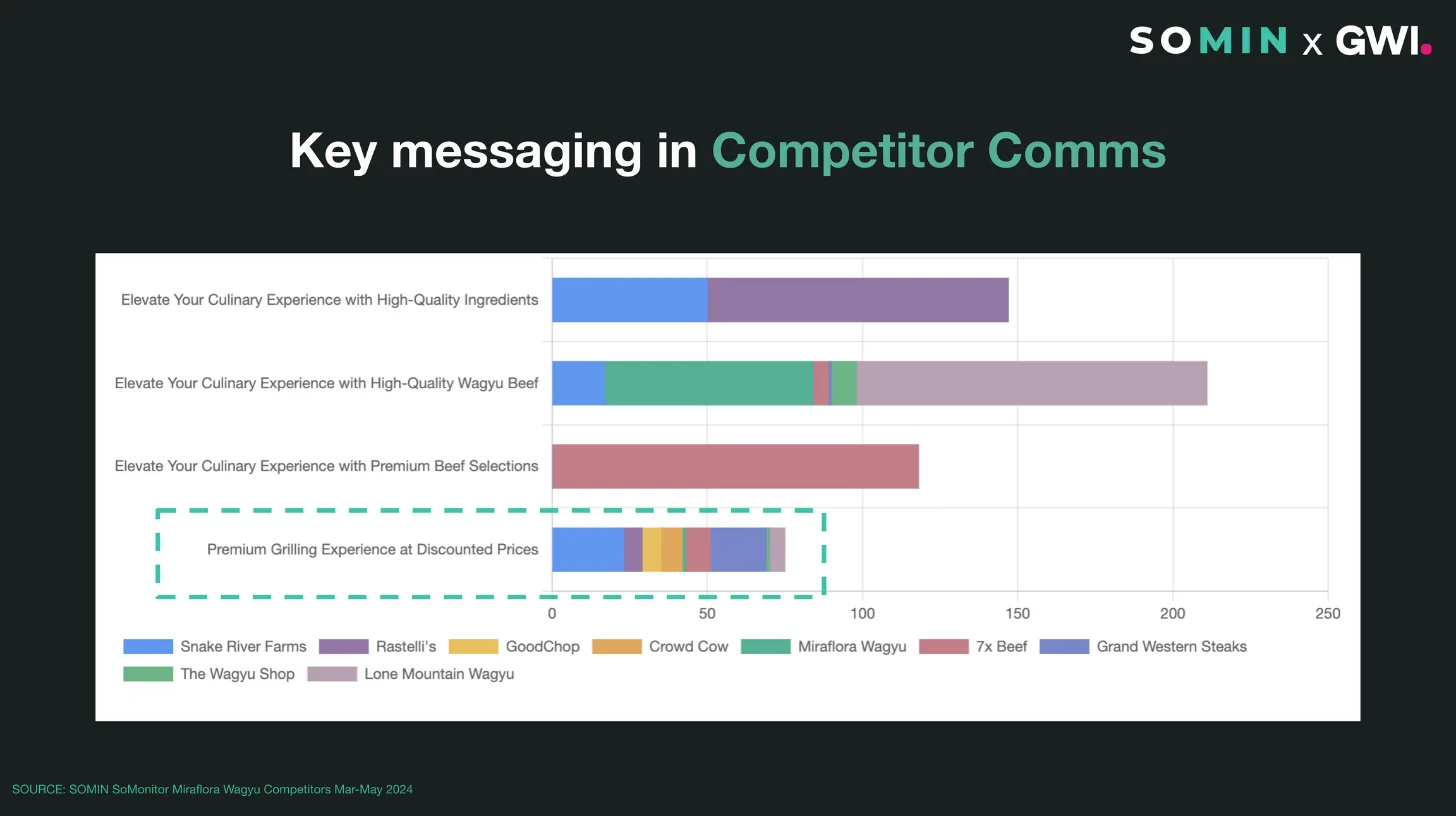
SOMONITOR (SoMin.ai) showed how Miraflora's competitors were advertising across Meta platforms: what messages they led with, which formats they used and how they positioned their products at different funnel stages.
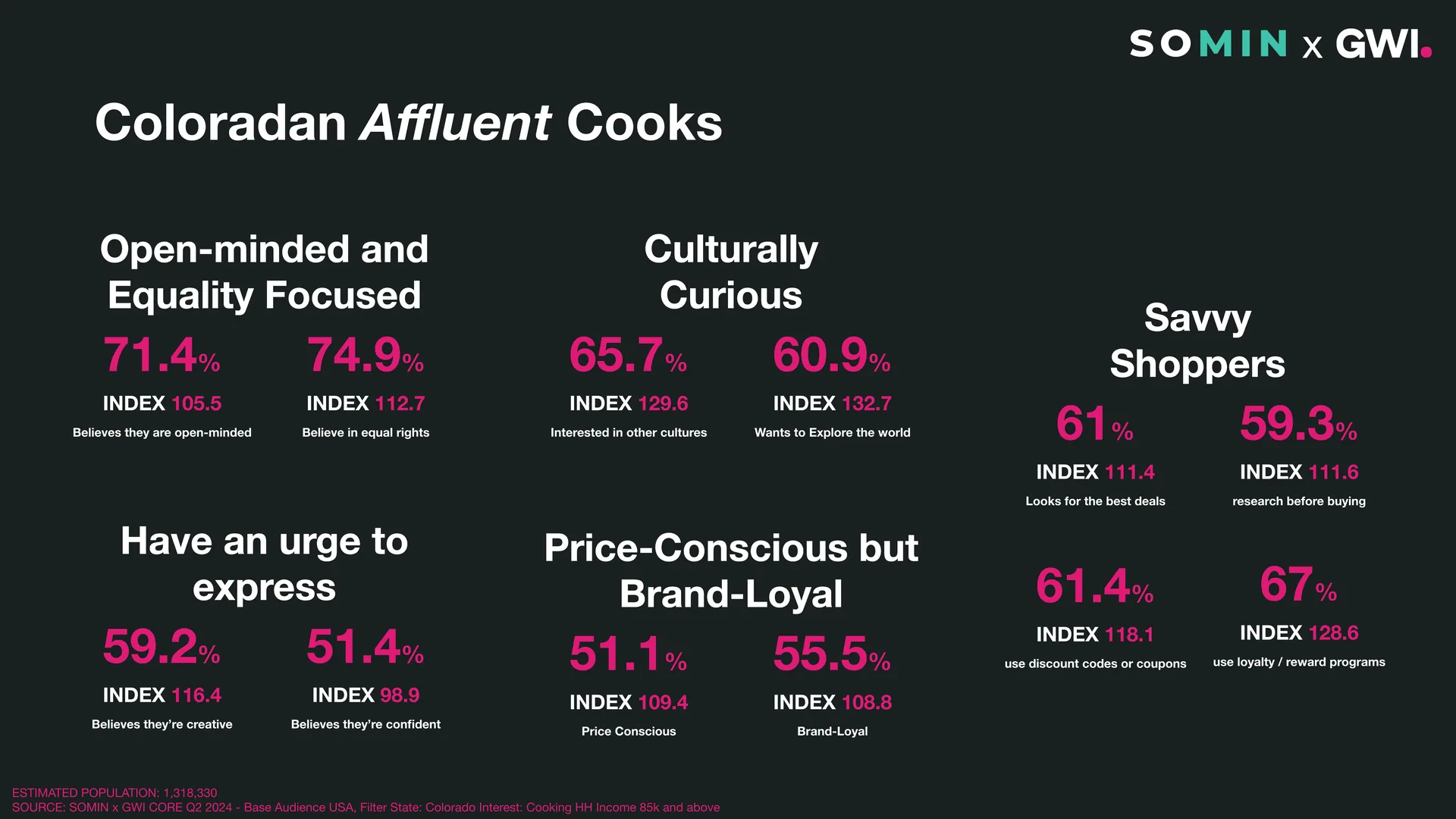
GWI provided audience breakdowns that went beyond demographics, showing beliefs, behaviours, income tiers and even lifestyle attitudes in Colorado.
Together, the tools removed the guesswork and helped craft messaging that was more closely aligned with how real people make decisions.
How do you turn audience data into a story?
One of the most actionable parts of the session was a simple, repeatable framework for crafting smarter marketing content from AI insights. Here is the process that was demonstrated:
Create a GWI persona
Start by building a data-backed audience persona in GWI, focused on demographics and behaviours such as online purchase drivers, loyalty programme usage and price sensitivity.
Generate a character
Turn that persona into a relatable, human profile. For example, "Sophie Chen", a joyful culinary enthusiast who values flavour exploration and community connection.
Choose a pain point
Identify real-world tensions based on audience data. One example: "Challenges with accessing affordable and convenient food options", a relatable frustration for busy, health-conscious shoppers.
Choose an angle
Frame your story around a meaningful theme. Depending on the persona, it could be health awareness or time constraints, whichever angle best matches their motivations and lifestyle.
Blend in your product
Integrate your product into the story so it becomes a natural solution rather than a hard sell. For Miraflora Wagyu, the emphasis was not just on the steak; it was about health, convenience and values.
Generate a story, gain insights, create content
Finally, use all these insights to create ad copy, headlines and visuals that speak directly to what matters most to your audience.
What did the resulting angles look like?
Angle: "The Joy of Real Food, Shared Together – Now With Real Rewards"
This angle focused on emotional connection and added a reward incentive, based on GWI data showing that 59% of the audience uses loyalty programmes.
Angle: "A Better Meal Starts with a Better Life – And Free Delivery"
This one used top online purchase drivers such as free delivery to address the conversion motivators of deal-seeking but health-focused shoppers directly.
Why build stories instead of product pitches?
This approach was not just about tweaking a few lines of copy; it reframed the messaging:
From: "Buy this premium product."
To: "Here's how this product fits your values, solves your problems, and makes life better."
By starting with audience truth instead of marketing assumptions, campaigns become more authentic, relatable and effective.
In the end, the goal is not to hand your campaigns over to machines; it is to make better, faster decisions with AI as your assistant. The session was a reminder that insight is the real edge in today's crowded market, from shaping strategy to optimising creatives.
What is Marketing Mondays?
Marketing Mondays is a series built around practical learning, real-life application and staying current in a fast-moving field. If this session sparked ideas or gave you a new way to think about your campaign challenges, do not stop here: the series also offers a free Marketing Mondays plugin for Claude.
Book a call for a FREE DEMO on how you can use SOMONITOR with GWI to strengthen your marketing campaigns.
Related reading
- Social listening vs audience research vs ad optimisation: which do you need?
- How to build market personas from audience data and competitor ads
- How do GWI, Nielsen, Euromonitor and Milieu market their audience data?
- What is a consumer tension in marketing, and how do you find one?
- Creative brief template: persona, tension, angle, story
FAQ
What is the difference between price-sensitive and deal-sensitive customers?
Price-sensitive customers want to pay less. Deal-sensitive customers want to feel they are getting value, so clearer messaging, a smoother purchase journey and incentives such as rewards or free delivery can work better than discounts.
What did SOMONITOR and GWI each contribute?
SOMONITOR showed how competitors advertised across Meta platforms: their messages, formats and positioning by funnel stage. GWI added audience breakdowns beyond demographics, covering beliefs, behaviours, income tiers and lifestyle attitudes.
What are the steps of the persona-to-story framework?
Create a GWI persona, turn it into a character, choose a pain point, choose an angle, blend in your product, then generate a story and create content from it.
Does AI replace the marketer in this process?
No. The goal is not to hand campaigns over to machines but to make better, faster decisions with AI as an assistant.